
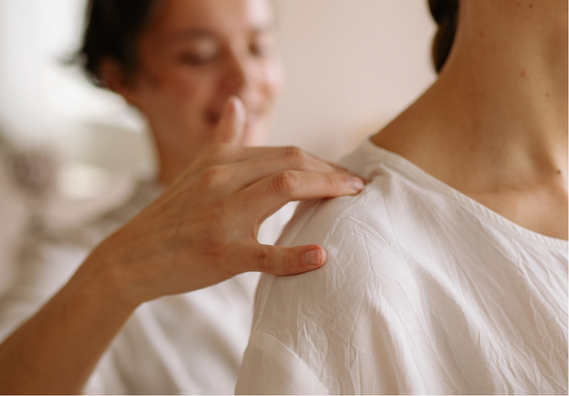
Does your loved one seem withdrawn, depressed or lonely? You have a simple yet effective therapy at the tips of your fingers it’s called touch.
Everyone needs touch. It becomes even more important for seniors as other senses fade. But elderly people are touched far less than children or young adults, and usually only for procedural reasons such as help into or out of a chair.
People who are sick or elderly may be touched very little – especially if their family is not near or their spouse has died or if they live in a caretaker environment such as a nursing home. These people especially need caring touch. People who do not revive caring touch can show signs of depression, anxiety, irritability, boredom, pain and other symptoms that can be mistaken for various diseases or physical conditions. Caring touch can give frail, ill or elderly people a real sense of closeness. There may be times when words fail you or your loved one cannot answer back. A gentle squeeze of the hand, a goodbye hug or a friendly arm around the shoulder may say more than an hour of conversation.
Skin is the largest human organ and is the first medium of communication. Skin that is clear, rosy and war, reflects ‘a picture of health’. Skin may be soft as satin, tough as leather, rough as sandpaper, and cold as ice – all stating that the skin is monitoring the state of the body. Much of our world is perceived by us with touch, whether things are hot or cold, rough or smooth. Touch, along with our other senses, gives us information about our environment. We can function and perceive even when we are without sight or hearing.

If our interactions with other people, we use touch. We hug each other when we meet or express emotion, slap someone on the back in congratulations or joy, shake hands on meeting and pat a hand to show understanding. Touch tells us we are safe, cared for and have value. People who are sure of a warm embrace are happier, more alert, more willing and able to communicate.
To touch someone is a personal gesture. Some people are not comfortable being touched by those they do not know well. It is wise to ask permission or to proceed very gently before someone’s hand or massaging a neck or back unless you know that person well. Caring touch is reassuring, gentle and appropriate. It contributes to a person feeling liked, respected and comforted.